
Empty
«Odyssey», translated by Emily Wilson, became a bestseller in the United States
06/15/2026
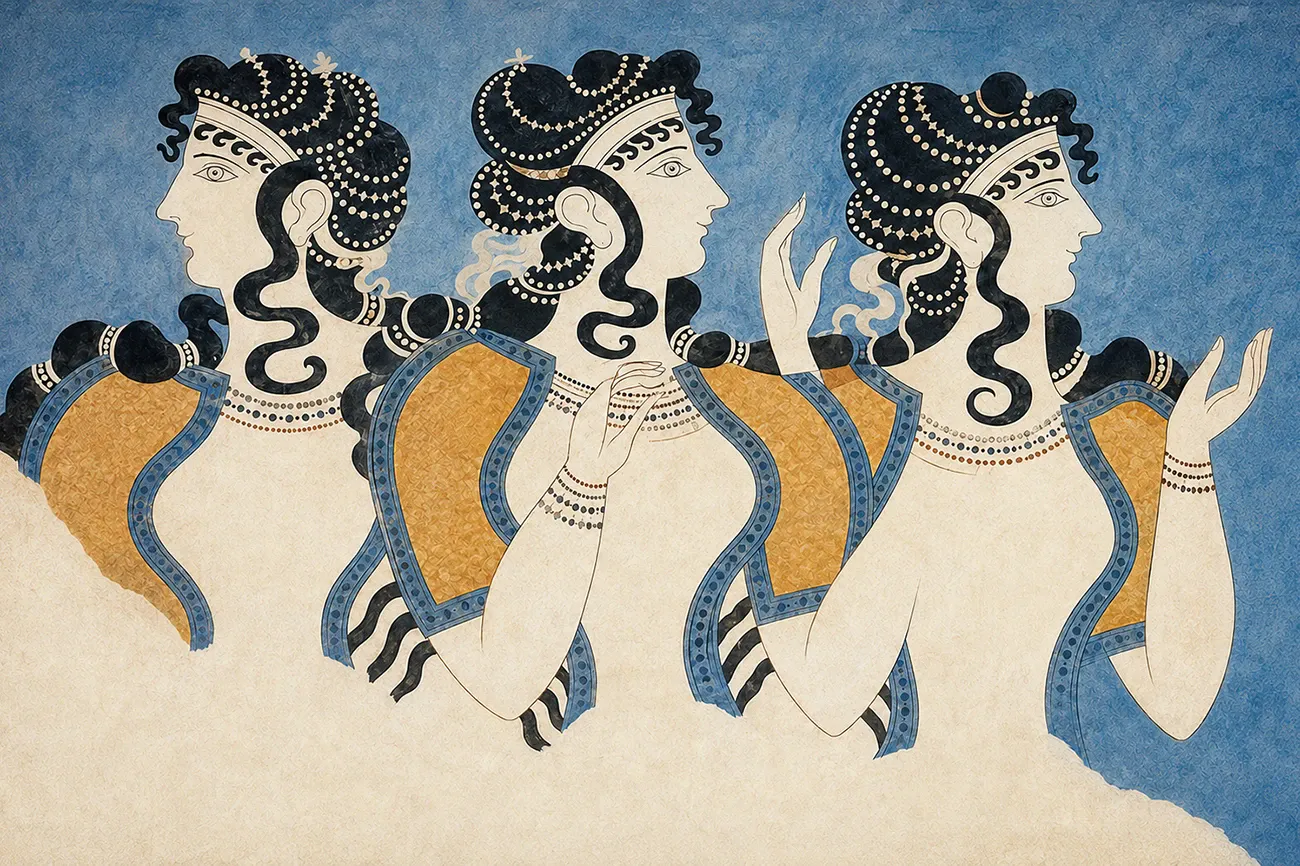
«Odyssey» Homer, translated by British-American philologist and specialist in ancient literature Emily Wilson, rose to second place in the overall ranking of the best-selling books in the United States.
First released by WW Norton & Company in 2017, this is a rare return to the center of mainstream reader attention. Sales began to gradually increase back in May, but their real rise coincided with the release of Christopher Nolan's film «Odyssey» on July 17. During the premiere week, Wilson's translation sold over 17.5 thousand printed copies and took eleventh place in the national ranking. A week later, sales almost doubled. Since the beginning of 2026, American readers have purchased approximately 126,000 printed copies of the book.
The total circulation of the translation in the United States, taking into account all formats, has already exceeded a million copies. The publisher reported that interest in the book increased markedly after the announcement of Nolan's work on the film adaptation in December 2024, and sales of the paper version by the summer of 2026 increased by about 40% compared to the previous year. Thus, the film influenced more than just weekly statistics: waiting for the premiere over the course of a year and a half gradually returned Homeric text to bookstores, university programs and public discussion.
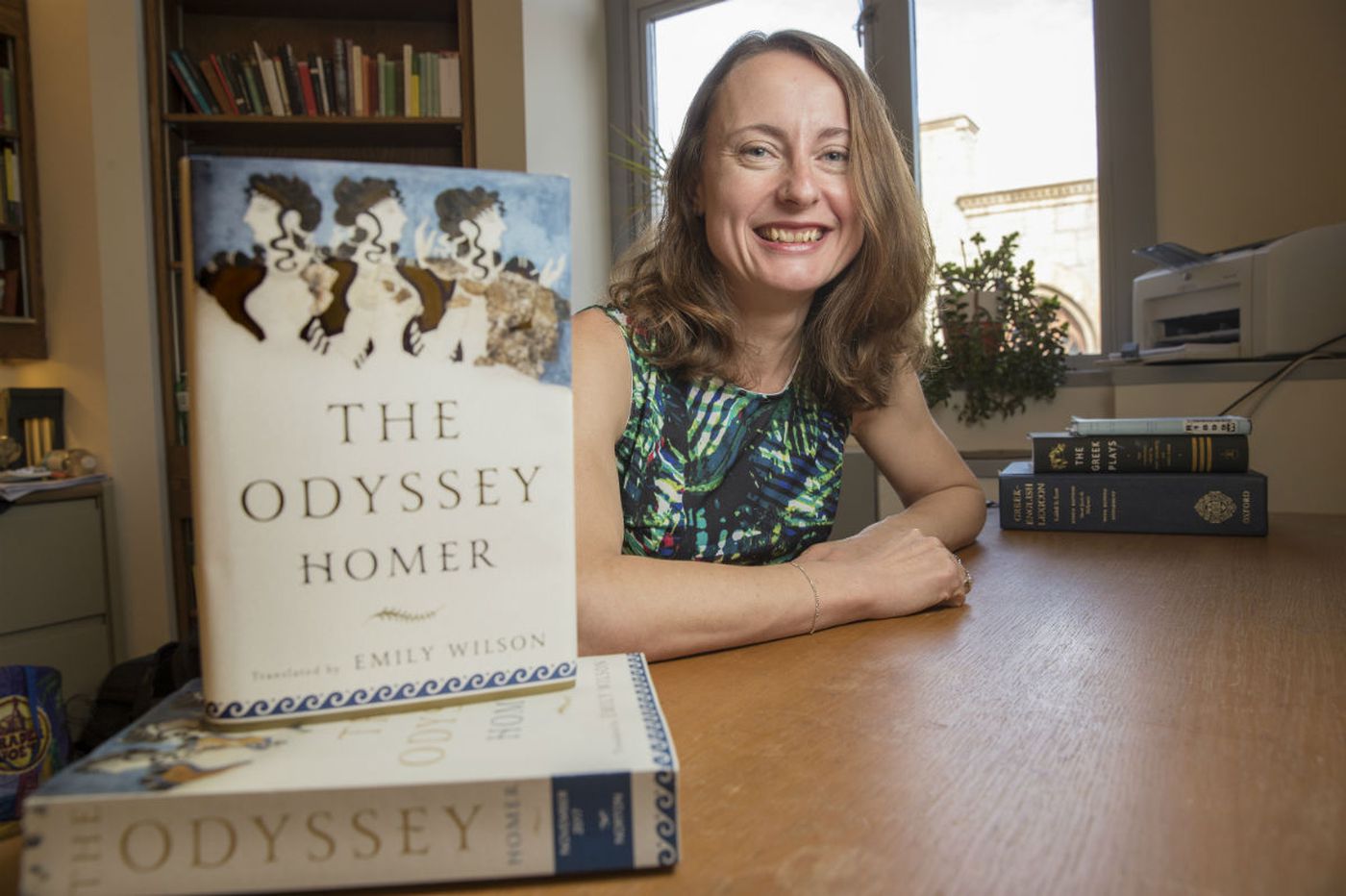
Emily Wilson became the first female translator «of the Odyssey» into English. Photo by Michael Bryant (Philadelphia Inquirer).
Emily Wilson — Professor and Chair of the Department of Classical Studies at the University of Pennsylvania. In addition to «Odyssey», she has translated tragedies of Seneca and Euripides, and in 2023 released her own translation of «Iliad». Wilson's academic biography combines ancient philology, comparative literature and the history of English literature: she received her classical education at Oxford, her doctorate— at Yale University. The University of Pennsylvania calls her one of the most notable modern translators of ancient Greek poetry.
Wilson became the first woman to publish a complete translation «of the Odyssey» from Ancient Greek into English. This fact has often been the focus of press attention, although the significance of her work is not limited to it. The translator abandoned deliberately sublime speech, which for a long time was considered almost an obligatory sign of the English Homer. She used a modern vocabulary and clear syntax, but retained the verse form: the poem is written in white iambic pentameter, traditional in English dramatic and narrative poetry.
Of particular importance to Wilson was the pace and volume of the original. The number of lines in her translation corresponds to the number of lines of the ancient Greek text — a solution that required extreme semantic and rhythmic accuracy. As a result, the narrative has been rid of many of the explanations and embellishments that have accumulated in the English translation tradition. Wilson's version is designed to be read aloud: the differences between the characters' voices are conveyed not by stylistic archaism, but by rhythm, intonation and choice of words.
The most famous was the first line: “Tell me about a complicated man” — «Tell me about a difficult person». Thus Wilson conveyed Homer's definition of polytropos, which simultaneously indicates the versatility, resourcefulness and ability of Odysseus to change his modes of action. Instead of a pre-heroized character, the reader faces a person whose mind cannot be separated from deceit, and whose survival art — from his willingness to mislead others.
It was this formula that interested Christopher Nolan. The director said that he perceived Odysseus as a strategist and a master of inventive solutions, and Wilson's translation helped him see the hero as an internal contradiction. The opening line of her version was also included in the film. However, the closeness between the translation and the film adaptation ends there, according to Wilson herself.
After the premiere, she published a long article «An Uncomplicated Man» in the London Review of Books, in which she sharply criticized the film. Wilson felt that the on-screen Odysseus had lost much of the ambiguity of Homer's hero, and the themes of time, memory, war, power and homecoming had been underdeveloped. At the same time, the translator recognized the obvious cultural result of the film: viewers again turn to the poem, compare different versions of it and discuss the principles of handling the classical text. In an interview with Amanpour & Company, she explained in detail how her reading of Homer diverges from Nolan's.
The growth of interest is also noticeable outside the book trade. At the San Francisco Public Library, the queue for the electronic version of Wilson's translation reached 758 people, and another 232 readers signed up to receive the printed book. However, some earlier translations of the poem remained available without waiting. The choice of the public, therefore, was determined not only by the desire to read Homer after the film, but also by attention to a specific modern version of the text.
The story of the current success «Odyssey» shows how a film adaptation can change the situation of a long-published book. The film provided the initial impetus, but second place in the overall ranking — was the result of the choice of tens of thousands of readers who, after the cinema, decided to turn to the poem itself. In this case, the on-screen version did not replace the literary source: it returned it to the space of mass reading and at the same time made it a subject of debate about how we see Odysseus today — a hero, an adventurer, a liar, a victim of war or a person whose complexity does not allow for simple interpretation.
Olga Ulanova. ATMA NEWS
Recent posts
- How Albert Camus's Philosophy Saves Us Today
- Irwin Welsh on old age, sober living, new romance and gun craze
- The International Literary University Uniart has opened a competitive recruitment process for the first stream
- Spirit and elementary particles
- «Odyssey», translated by Emily Wilson, became a bestseller in the United States
- Latvia will limit the import of books from Russia and Belarus
© 2026 ATMA book. All rights reserved